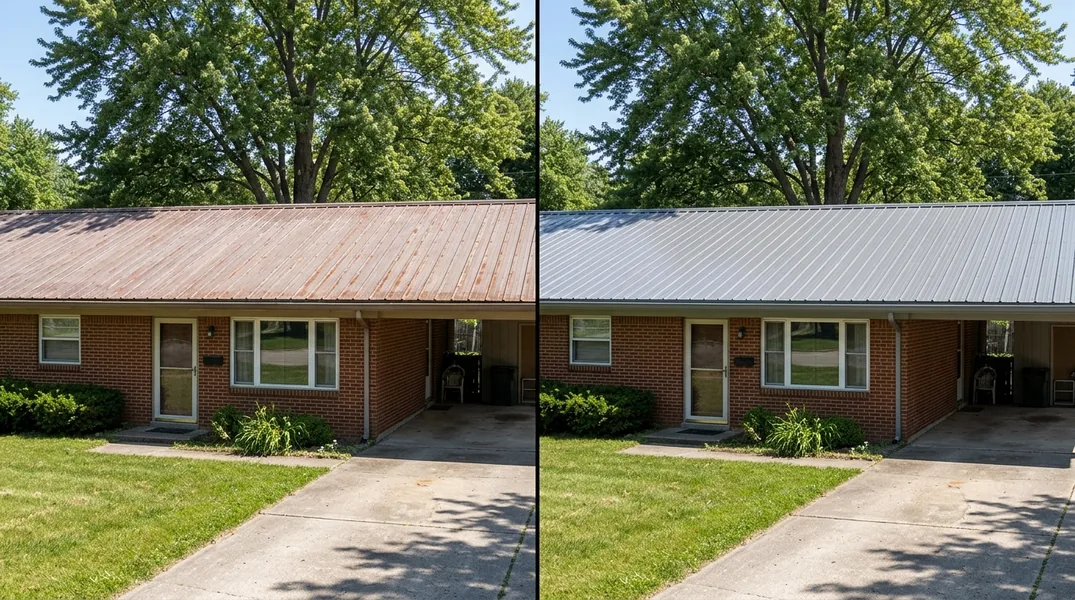
How Metal Roofs Handle Indiana's Snow Load
When winter settles over Indianapolis, your roof takes on a serious workload. Snow accumulates, melts slightly during the day, refreezes at night, and repeats that cycle for months. The good news for homeowners considering a metal roof is that metal panels are engineered to handle exactly this kind of punishment. Metal roofs have a high strength-to-weight ratio, meaning they can support heavy snow loads without sagging or structural stress. In fact, most standing seam panels are tested to meet or exceed local building code requirements for snow load, which in central Indiana can reach 20 to 25 pounds per square foot in a typical winter.
What makes metal especially appealing is how it distributes weight. Unlike asphalt shingles, which can become brittle and cracked under repeated freeze-thaw stress, metal panels flex slightly and return to their original shape. The interlocking seams of a Standing Seam Metal Roofing system create a continuous barrier that keeps snow and moisture from working its way under the panels. If you are researching a metal roof in winter conditions, the snow load question is usually the first one homeowners ask, and the answer is reassuring: a properly installed metal roof is one of the most winter-ready roofing options available.
Do Metal Roofs Shed Snow? What to Expect
One of the most common questions we hear is, do metal roofs shed snow? The short answer is yes, but with some nuance. Metal roofs are smoother than shingles, so snow tends to slide off more readily, especially on steeper pitches. This is generally a good thing because it reduces the amount of snow sitting on your roof and lowers the risk of ice dam formation. However, snow shedding can happen suddenly, so it is important to keep walkways, driveways, and landscaping clear below roof edges. Homeowners in Carmel and other nearby communities often appreciate this self-shedding behavior because it means less shoveling or raking of the roof after a big storm.
That said, snow shedding is not guaranteed in every condition. Wet, heavy snow can cling to metal, particularly on lower-slope roofs or when temperatures hover right around freezing. In those cases, a small amount of snow may stay put until it melts or is removed. The key is proper installation: panel profile, pitch, and fastener placement all influence how well a metal roof performs in winter. A professional installer will assess your roof's slope and recommend a panel configuration that balances snow shedding with safety and structural performance.
Ice Dams and Metal Roofs: What Homeowners Should Know
Ice dams are a major concern for any roof in central Indiana. They form when warm air escapes from the attic, melts snow on the upper roof, and the water refreezes at the colder eaves. Over time, that ice can back up under shingles and cause water damage to ceilings, walls, and insulation. Metal roofs are not immune to ice dams, but they do offer some advantages. Because metal panels are smooth and have fewer seams than shingle roofs, water that does get behind the ice has a harder time finding a path into your home. Additionally, metal roofs can be installed with proper underlayment and ventilation strategies that reduce the temperature differential driving ice dam formation.
The most effective defense against ice dams is a well-insulated and ventilated attic, combined with a roof system designed for cold climates. If you are considering a Metal Roof Replacement, ask your contractor about ice and water shield underlayment at the eaves and proper ridge and soffit ventilation. These details matter more than the roofing material itself when it comes to preventing ice dams. A metal roof in winter can perform beautifully, but only when the whole roof assembly is built to handle Indiana's freeze-thaw cycles.
Freeze-Thaw Cycles: Why Metal Outperforms Shingles
Indiana winters are famous for freeze-thaw cycles. Snow melts during a mild afternoon, water seeps into tiny cracks, and then a nighttime freeze expands that water and widens the cracks. Asphalt shingles are particularly vulnerable to this because their granular surface and asphalt binder can become brittle over time. Metal, by contrast, does not absorb water and does not crack when temperatures drop. Its thermal expansion and contraction are predictable and manageable when panels are installed with the correct fastening systems and spacing.
This is why many homeowners in Fishers and across the region choose metal when their old shingle roof reaches the end of its life. A metal roof in winter stays dimensionally stable, so you avoid the curling, cracking, and granule loss that plague shingles after a few hard freezes. If you are weighing your options, it is worth getting a free estimate to see how a metal system would be specified for your home's specific roof pitch and insulation setup.
Metal Roof Installation Near Me: When to Call a Pro
If you are searching for metal roof installation near me in the Indianapolis area, you are probably trying to figure out whether your current roof can make it through another winter. Signs that it is time to call a professional include visible rust or corrosion on existing metal, loose or missing fasteners, sagging roof lines, and interior water stains after snow melts. Even if your roof looks fine from the ground, freeze-thaw damage can be hidden under the surface. A professional inspection can catch small issues before they become expensive repairs.
Proper installation is especially critical in winter climates. Panel overlap, fastener torque, closure strips, and underlayment selection all affect how a metal roof performs when snow and ice are on it. Choosing an experienced local installer means your roof is detailed for Indiana conditions, not just generic specifications. Whether you need a full Metal Roof Installation or are considering a Metal Roof Over Shingles (Retrofit), the installation details are what determine long-term performance.
Is a Metal Roof Worth It for Indiana Winters?
For most homeowners, the answer is yes, provided the roof is installed correctly and your attic is properly insulated and ventilated. Metal roofs offer durability, energy efficiency, and low maintenance, and they handle snow load and freeze-thaw cycles better than many alternative materials. They also tend to last significantly longer than asphalt shingles, which means fewer replacements over the life of your home. If you are comparing pricing, it helps to look at cost per year of service rather than just the upfront number.
That said, no roof is maintenance-free. Snow shedding can create hazards below the eaves, and ice dams can still form if attic heat is not controlled. A reputable contractor will walk you through these considerations and help you decide whether metal is the right fit for your home in Noblesville or anywhere else in the metro area. If you are ready to talk through your options, call Indianapolis Metal Roofing at (463) 209-8558 or request a free estimate today. A winter-ready roof starts with a conversation about your home's specific needs.
Looking for a professional metal roofing contractor in Indianapolis? Indianapolis Metal Roofing responds fast for all your metal roofing needs.
Get a Free QuoteOur services: Metal Roof Installation · Standing Seam Metal Roofing · Metal Roof Replacement